
Our Work
Bio Corridor Institute (BCI) was born from a journey of learning across cultures, landscapes, and communities.
BCI brings together traditional ecological knowledge and innovation to address climate change, strengthen agricultural resilience, and restore biodiversity. At the heart of its work is a commitment to farmers: sustaining the knowledge of the last generation while inspiring the next to carry it forward and build upon it.
Rooted in Nepal, a global biodiversity hotspot, BCI creates spaces for communities, researchers, and learners to exchange knowledge across borders and generations. By connecting ecology, people, and communities, BCI works toward a future where landscapes thrive, traditional wisdom evolves, and positive environmental change continues for generations to come.
Our Story
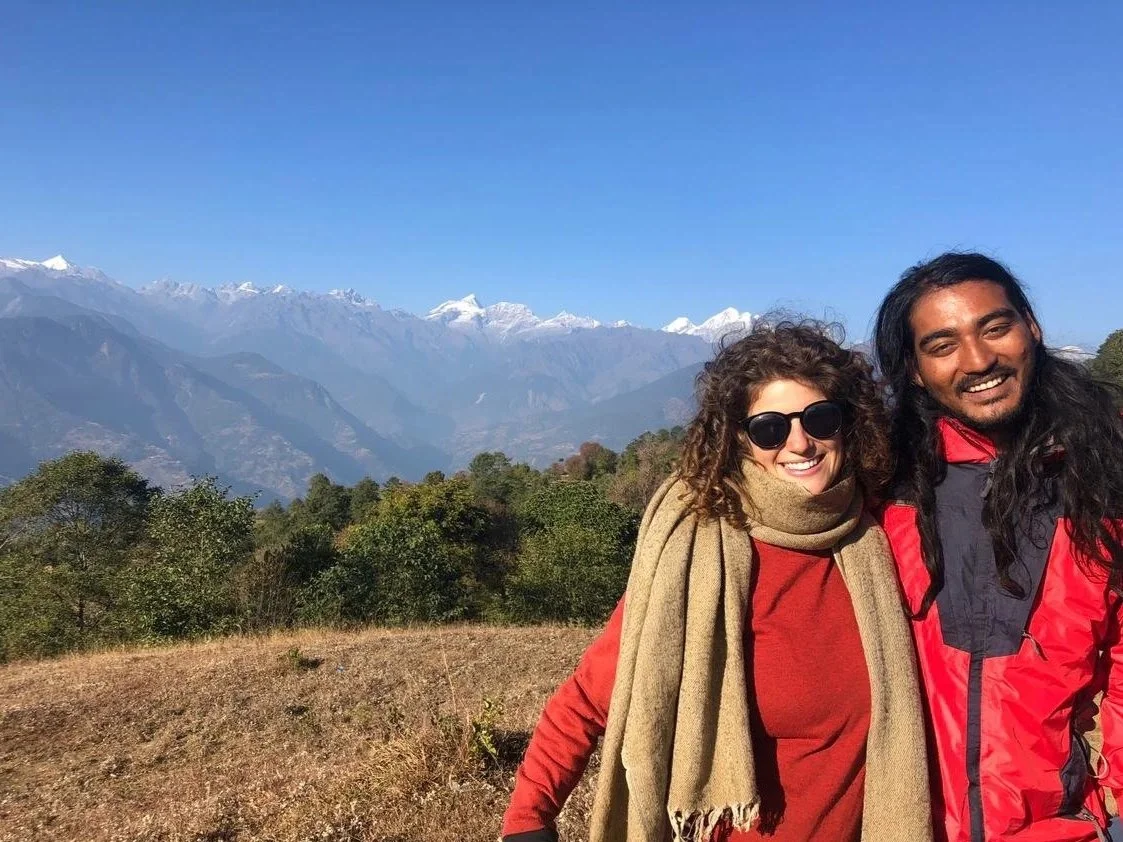
Beth began working in Nepal after the devastating 7.8-magnitude earthquake of 2015, helping rebuild Sindhupalchok, the quake’s epicentral district, with the NGO Conscious Impact, where she now serves as a board member. After years of reconstruction using compressed stabilized earth blocks (CSEB), she turned her attention to supporting agriculture in the village of Takure.
Anjesh joined Conscious Impact in 2020, bringing his own journey. An Erasmus Mundus scholarship took him to Europe to study economics, where he explored development economics with the dream of applying what he learned in Nepal. Beth and Anjesh worked side by side at Conscious Impact for the better part of five years, while Beth also began working with the Regeneration Field Institute in 2021.
In 2023, they traveled to Ecuador and spent the summer working at Los Arboleros farm, deepening their experience in regenerative agriculture and environmental education. Until recently, they continued working across Latin America, learning from diverse landscapes and approaches to community development.
Bio Corridor Institute grew from this shared journey and their commitment to building climate resilience through the knowledge, strength, and collaboration of local communities. Now, they are bringing nearly a decade of combined experience back to Nepal, connecting people, communities, and landscapes through regenerative development and environmental education.